OpenCode Confirms Distillation Attack: Third-Party API Key Depletion Affects 1.4% of Developers
OpenCode published an incident disclosure confirming that attackers drained OpenAI, Anthropic, and Google API balances from 1.4% of its accounts to run illicit model distillation workloads.
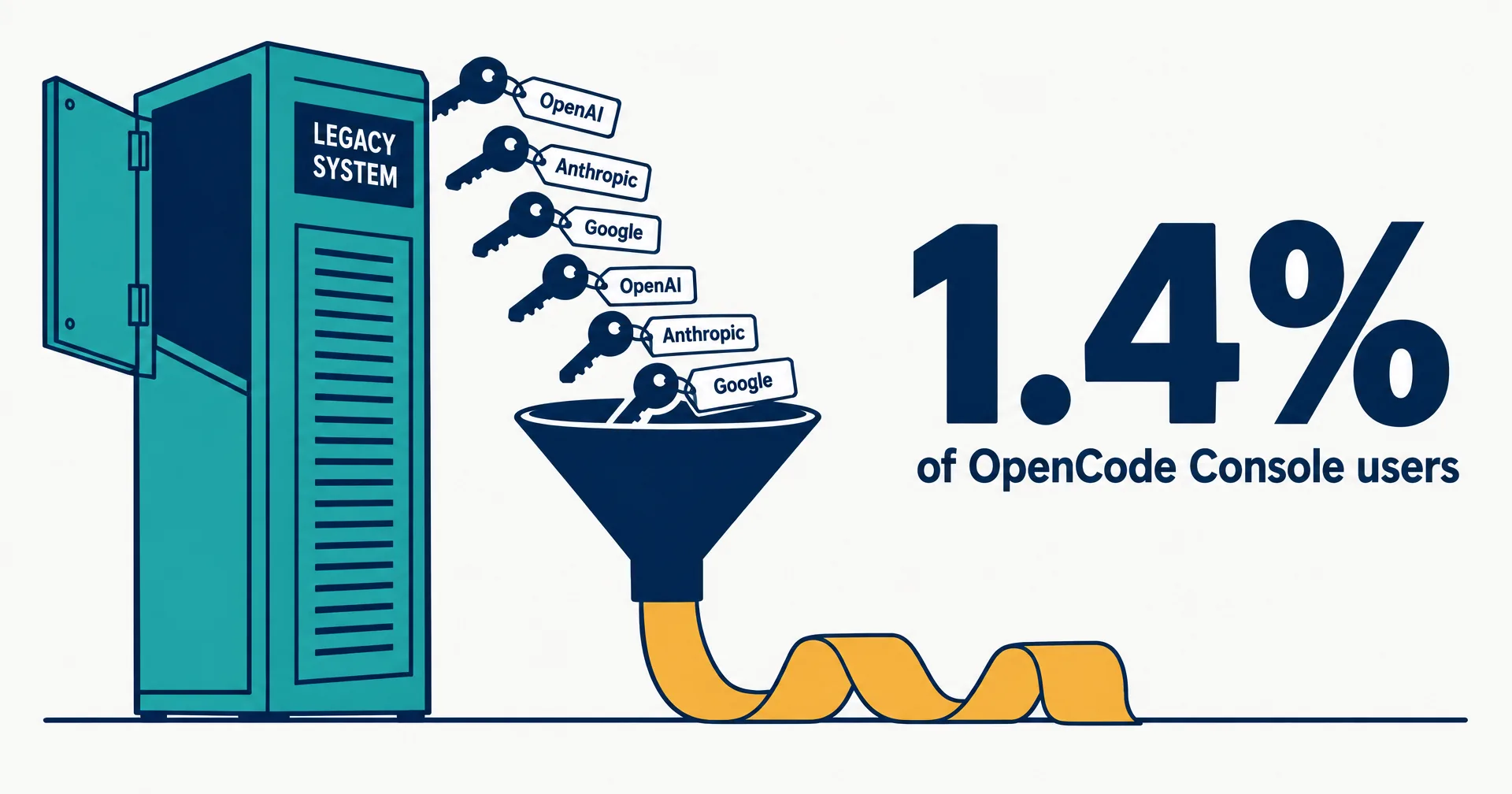
On October 18, 2026, AI coding platform OpenCode released an official statement disclosing an automated credential exploitation event that depleted user API balances across OpenAI, Anthropic, and Google Cloud endpoints.
The attackers did not target OpenCode’s core database of billing information or proprietary code repositories. Instead, they extracted stored client-side environment keys to execute high-concurrency model distillation pipelines without paying for frontier inference.
Incident Timeline and Blast Radius
OpenCode’s security team issued email alerts to affected account holders within four hours of detecting abnormal egress spikes. According to the company’s incident report:
- Impact Scope: 1.4% of registered developer accounts experienced unauthorized token consumption.
- Affected Providers: OpenAI platform keys, Anthropic Console keys, and Google Vertex AI service account credentials.
- Attack Objective: High-volume, structured question-and-answer extraction designed to train student models on reasoning chains.
Distillation Interception Flow
┌───────────────────────────┐     ┌───────────────────────────┐
│ Compromised OpenCode Keys │ ──▶ │ Distributed Bot Clusters  │
└───────────────────────────┘     └─────────────┬─────────────┘
                                                │
                                                ▼
┌─────────────────────────────────────────────────────────────┐
│ High-Density Frontier Queries (OpenAI / Anthropic / Google) │
│ - Mathematical proofs, code repairs, agentic planning      │
└───────────────────────────────┬─────────────────────────────┘
                                │
                                ▼
┌─────────────────────────────────────────────────────────────┐
│ Extracted Synthetic Datasets (Student Model Training)       │
└─────────────────────────────────────────────────────────────┘
The Shift in Distillation Defense
Model distillation requires millions of high-quality completions from leading frontier systems. As frontier laboratories tightened their own anti-scraping controls, automated captchas, and IP velocity thresholds, malicious actors redirected extraction efforts toward third-party developer tools.
Large frontier providers deploy dedicated behavioural analysis to spot synthetic data harvesting:
- Repetitive Semantic Probing: Frontier providers identify patterns where prompts systematically explore model boundary conditions.
- Timing Regularity: Automated harvesting pipelines often produce unnatural inter-token completion intervals.
- Session Variance: Legitimate developers modify code and inspect tests; distillation scripts generate uniform output structures.
Third-party developer environments that aggregate user API keys often lack equivalent behavioral analytics, making them softer entry points for extraction attacks.
Economic Consequences for Developer Tooling
The OpenCode breach establishes an uncomfortable precedent for developer tooling ecosystems:
- Heightened Liability for Intermediate Platforms: Storing plaintext or reversibly encrypted keys creates immediate exposure when perimeter defenses fail.
- Rising Scarcity Value for Frontier Tokens: As laboratories close off leakage paths, verified high-tier outputs from models like GPT-6 Astra, Claude Opus, and Gemini 4 Argon grow more expensive to reproduce.
- Migration Toward Ephemeral Tokens: Security architectures are shifting from persistent API keys toward scoped, short-lived OAuth tokens that expire after minutes of inactivity.