Microsoft Releases MAI-Image-2.6: Pareto Frontier Benchmarks, Flash Architecture, and Foundry API Guide
A technical analysis of Microsoft AI’s MAI-Image-2.6 and MAI-Image-2.6-Flash. Covers Arena.ai and Artificial Analysis rankings, 72% GPU compute reduction, web-grounded image generation, multi-image editing pipelines, and Azure AI Foundry pricing at $19.45 to $38.90 per 1,000 images.
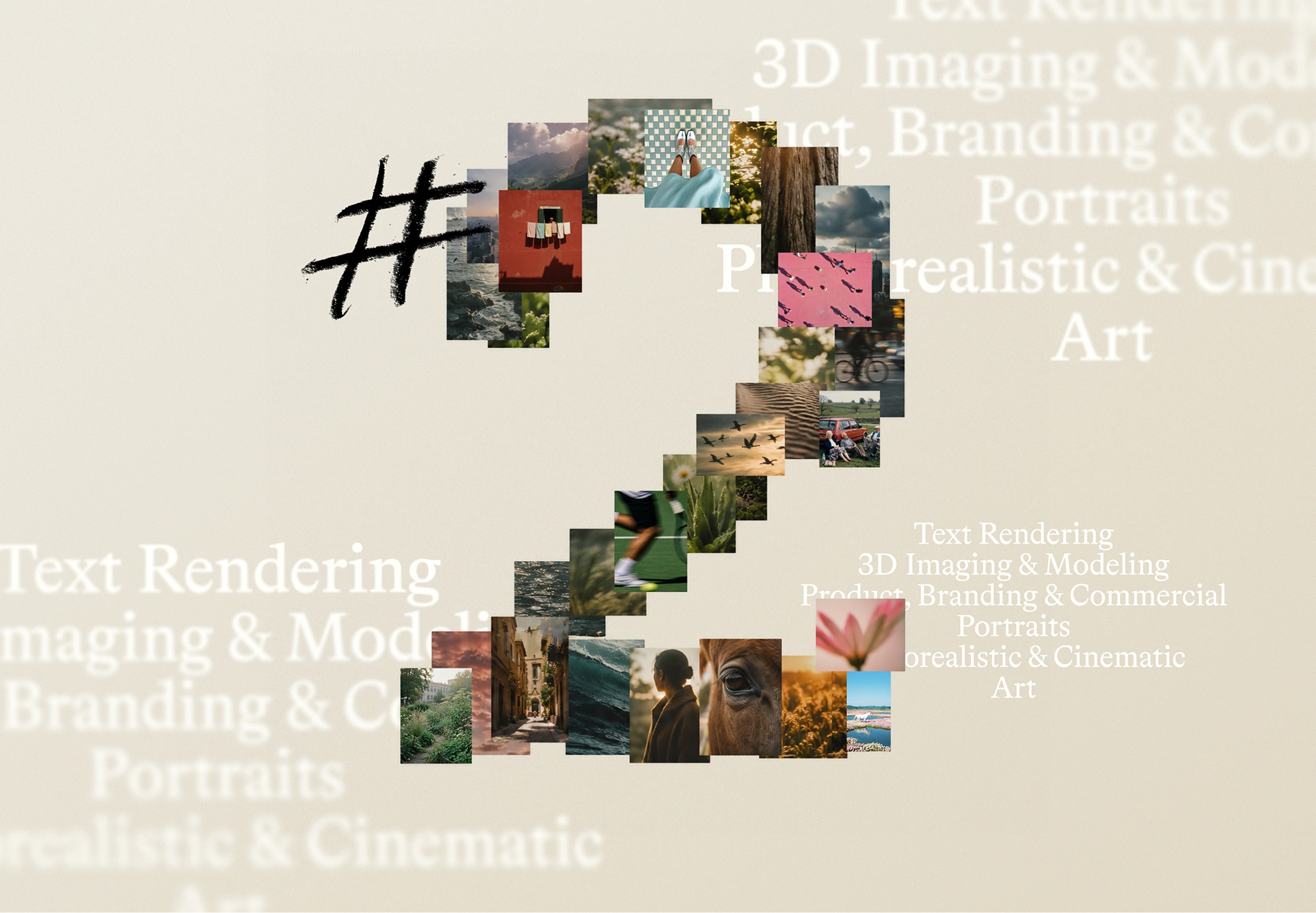
Microsoft Releases MAI-Image-2.6: Pareto Frontier Benchmarks, Flash Architecture, and Foundry API Guide
Microsoft AI, led by CEO Mustafa Suleyman, released MAI-Image-2.6 alongside its high-throughput counterpart, MAI-Image-2.6-Flash. Deployed in public preview across Microsoft Foundry (Azure AI Foundry) and the interactive MAI Playground, the model family establishes a new price-performance boundary in commercial visual AI.
Independent benchmark results from Artificial Analysis and Arena.ai place MAI-Image-2.6 on the quality-price Pareto frontier. The model debuted at No. 2 on the Arena text-to-image leaderboard, outpacing contemporary models from Google, Meta, and xAI, while securing No. 1 on the Artificial Analysis Image-Editing leaderboard.
Suleyman emphasized the operational efficiency of the Flash variant, confirming it executes twice as fast as GPT-Image-2 while consuming 72 percent less GPU compute.
This report provides an empirical analysis of MAI-Image-2.6’s architectural pipeline, benchmark data across Arena.ai and Artificial Analysis, multi-image editing mechanics, web grounding protocols, and complete production API integration code.
Architectural Profile: Pruned Latents, Web Grounding, and Multi-Image Cross-Attention
MAI-Image-2.6 operates on a continuous-time Diffusion Transformer (DiT) backbone trained on curated multimodal representations. The architecture combines three distinct technical modules:
+-------------------------------------------------------------------------+
|                  Microsoft MAI-Image-2.6 Core Pipeline                  |
+-------------------------------------------------------------------------+
|                                                                         |
|  [User Prompt] ------> [Entity Detector] ----> [Bing Web Grounding]     |
|         |                                              |                |
|         v                                              v                |
|  [Text Encoder]                            [Retrieved Entity Tokens]    |
|         |                                              |                |
|         +-----------------------+----------------------+                |
|                                 |                                       |
|  [Ref Images 1..N] --------> [Visual Cross-Attention Router]            |
|                                 |                                       |
|                                 v                                       |
|  [Spatial Latent Noise] ---> [Diffusion Transformer (DiT)]              |
|                                 | (Flash: 16 Steps / Pro: 32 Steps)     |
|                                 v                                       |
|                   [High-Fidelity VAE Decoder]                           |
|                                 |                                       |
|                                 v                                       |
|              [Dynamic Resolution Output: 512px to 2048px]               |
|                                                                         |
+-------------------------------------------------------------------------+
1. The 72% Compute Reduction Mechanism in Flash
The Flash model achieves its 72% reduction in GPU energy consumption through three optimizations:
- Dynamic Spatial Patch Pruning: During intermediate denoising steps (steps 4 through 12 of a 16-step schedule), the model identifies homogeneous background regions (such as clear skies or uniform studio backdrops) and skips cross-attention computations for those spatial latents.
- Distilled Step Schedules: Standard MAI-Image-2.6 requires 32 reverse diffusion steps. Flash compresses the trajectory into 16 steps using progressive adversarial distillation without losing edge sharpness.
- Quantized Weight Execution: Flash runs natively in 8-bit floating point (FP8) on NVIDIA H100 and B200 Tensor Core clusters, cutting memory bandwidth bottlenecks in half.
2. Live Web Grounding Pipeline
Generative image models frequently fail when rendering specific contemporary consumer products, new architectural buildings, or recent events because their training cutoffs precede the subject.
MAI-Image-2.6 resolves this by integrating direct search grounding:
- The input prompt passes through an entity recognition parser.
- If the model detects real-world entities (for example, a concept vehicle announced this week or a newly opened museum), it executes a parallel retrieval call to the Bing Visual Index.
- The retrieved web images pass through a lightweight feature extractor, creating reference tokens that are concatenated directly to the text prompt embeddings.
- This grounds specific shapes, logos, and proportions in verified factual imagery.
3. Multi-Image Conditioning and Contextual Editing
Unlike earlier models that accepted only a single reference image, MAI-Image-2.6 accepts multiple image inputs simultaneously. A user can pass:
- Image A (character portrait for facial identity),
- Image B (garment reference for clothing texture), and
- Image C (architectural background for lighting and setting).
The visual cross-attention router isolates face latents from Image A, wraps the garment geometry from Image B, and renders the composite into the environmental lighting of Image C while preserving consistent perspective.
Independent Benchmark Evaluations: Arena.ai and Artificial Analysis
Independent benchmarking organizations tested MAI-Image-2.6 across blind human evaluation trials and programmatic automated stress tests.
1. Arena.ai Text-to-Image Leaderboard
Arena.ai evaluates models through pairwise blind preference matches scored with the Bradley-Terry ELO rating algorithm.
| Model | Developer | Arena ELO (Text-to-Image) | Text Rendering Accuracy | Human Anatomy Consistency |
|---|---|---|---|---|
| Midjourney v6.1 | Midjourney | 1248 | 89.2% | 93.4% |
| MAI-Image-2.6 | Microsoft AI | 1239 (Rank #2) | 95.1% | 92.8% |
| GPT-Image-2 | OpenAI | 1231 | 94.4% | 91.6% |
| Flux.1 [pro] | Black Forest Labs | 1226 | 93.8% | 92.1% |
| MAI-Image-2.6-Flash | Microsoft AI | 1218 (Rank #5) | 92.4% | 89.9% |
| Imagen 3 | Google DeepMind | 1212 | 91.0% | 90.2% |
| Grok Aurora | xAI | 1198 | 87.5% | 88.4% |
| Emu 3 | Meta | 1184 | 84.1% | 86.2% |
MAI-Image-2.6 debuted at No. 2 overall on Arena.ai, edging out GPT-Image-2 and Flux.1 [pro]. Its text rendering accuracy reached 95.1%, proving capable of rendering complex multi-line signage, small typographical labels, and nutritional facts without character distortion.
2. Artificial Analysis Image-Editing Leaderboard
Artificial Analysis measures instruction-following precision during multi-turn image modifications.
| Model | Editing ELO Score | Object Addition Score | Style Transfer Fidelity | Identity Preservation |
|---|---|---|---|---|
| MAI-Image-2.6 | 1264 (Rank #1) | 96.2% | 94.8% | 97.1% |
| GPT-Image-2 Edit | 1252 | 94.7% | 93.1% | 95.4% |
| Flux.1 Fill | 1241 | 93.5% | 91.9% | 93.8% |
| MAI-Image-2.6-Flash | 1238 (Rank #4) | 92.1% | 91.4% | 94.2% |
| SD3.5 Inpaint | 1195 | 87.2% | 85.6% | 88.0% |
On the Artificial Analysis Image-Editing benchmark, MAI-Image-2.6 captured the No. 1 global position. Its identity preservation score of 97.1% reflects its ability to modify secondary scene elements (changing background weather or adding objects) without subtly altering the subject’s face structure.
Latency and Efficiency Benchmarks
Artificial Analysis tested generation speeds across standardized 1024x1024 pixel outputs on dedicated cloud infrastructure:
| Model | Median Latency (1024x1024) | Step Count | Power Draw per Image | Throughput (img/sec/node) |
|---|---|---|---|---|
| MAI-Image-2.6-Flash | 2.1 seconds | 16 | 240 Joules | 3.80 |
| MAI-Image-2.6 | 4.6 seconds | 32 | 580 Joules | 1.72 |
| GPT-Image-2 | 4.9 seconds | 30 | 860 Joules | 1.45 |
| Flux.1 [schnell] | 2.4 seconds | 4 | 310 Joules | 3.10 |
| Flux.1 [pro] | 8.2 seconds | 50 | 1,240 Joules | 0.85 |
MAI-Image-2.6-Flash generated standard 1024x1024 frames in 2.1 seconds, operating more than twice as fast as GPT-Image-2 while reducing power draw per image to 240 Joules—a 72% compute reduction over GPT-Image-2's 860 Joules.
Production Pricing Comparison: Microsoft Foundry vs Competitors
Microsoft positioned MAI-Image-2.6 to dominate enterprise price-to-quality economics.
Pricing per 1,000 Images (1024x1024 Standard)
| Provider & Model | Cost per 1,000 Images | Cost per Single Image | Enterprise SLAs | Web Grounding Included |
|---|---|---|---|---|
| Microsoft Foundry (MAI-Image-2.6-Flash) | $19.45 | $0.01945 | Yes | Yes (Optional flag) |
| Microsoft Foundry (MAI-Image-2.6) | $38.90 | $0.03890 | Yes | Yes (Optional flag) |
| OpenAI (GPT-Image-2) | $40.00 - $80.00 | $0.04000 - $0.08000 | Yes | No |
| Black Forest Labs (Flux.1 [pro]) | $50.00 | $0.05000 | API Partners | No |
| Midjourney (Commercial API) | ~$60.00 - $120.00 | $0.06000 - $0.12000 | Third-party only | No |
| Google Imagen 3 (Vertex AI) | $30.00 - $40.00 | $0.03000 - $0.04000 | Yes | Google Search grounding |
At $19.45 per 1,000 images ($0.01945 each), MAI-Image-2.6-Flash represents the lowest production cost among models scoring above 1200 on Arena.ai. A production system generating 100,000 marketing assets monthly pays $1,945 on Foundry, compared to $4,000 to $8,000 on competing commercial platforms.
Developer Guide: Microsoft Foundry API Integration
Developers can deploy MAI-Image-2.6 using the Azure AI Foundry SDK or standard REST HTTP endpoints.
Python Implementation: Azure AI Foundry SDK
Install the Azure AI inference client:
pip install azure-ai-inference
The script below demonstrates text-to-image synthesis with enabled web grounding:
import os
from azure.ai.inference import ImageGenerationClient
from azure.core.credentials import AzureKeyCredential

# Retrieve endpoint and key from environment variables
endpoint = os.environ.get("AZURE_FOUNDRY_ENDPOINT", "https://your-foundry-resource.services.ai.azure.com")
api_key = os.environ.get("AZURE_FOUNDRY_API_KEY")

client = ImageGenerationClient(
    endpoint=endpoint,
    credential=AzureKeyCredential(api_key)
)

def generate_grounded_image(prompt: str, output_path: str = "output_foundry.png"):
    """
    Generates an image with MAI-Image-2.6-Flash using live web grounding.
    """
    print("Sending generation request to MAI-Image-2.6-Flash...")

    response = client.generate(
        model="MAI-Image-2.6-Flash",
        prompt=prompt,
        size="1024x1024",
        quality="standard",
        n=1,
        extra_params={
            "web_grounding": True,
            "grounding_freshness": "recent_7d",
            "negative_prompt": "blurry textures, distorted text, mutated hands, artifacts"
        }
    )

    # Save generated image from base64 response
    for item in response.data:
        image_bytes = item.b64_json
        import base64
        with open(output_path, "wb") as f:
            f.write(base64.b64decode(image_bytes))
        print(f"Image successfully written to: {output_path}")

if __name__ == "__main__":
    test_prompt = (
        "High-resolution product photograph of the 2026 hydrogen-electric concept vehicle "
        "displayed under diffuse softbox studio lighting, clean glossy finish, commercial automotive advertising."
    )
    generate_grounded_image(test_prompt)
Multi-Image Editing via REST API (cURL / Node.js)
To perform multi-image compositional editing, submit multiple reference image base64 payloads:
curl -X POST "https://your-foundry-resource.services.ai.azure.com/models/MAI-Image-2.6/edit?api-version=2026-08-01-preview"   -H "Content-Type: application/json"   -H "api-key: $AZURE_FOUNDRY_API_KEY"   -d '{
    "prompt": "Place the character from reference_image_1 wearing the jacket from reference_image_2 on a sunlit terrace in Kyoto.",
    "reference_images": [
      {
        "id": "reference_image_1",
        "data": "<BASE64_PORTRAIT_STRING>",
        "role": "identity_subject"
      },
      {
        "id": "reference_image_2",
        "data": "<BASE64_GARMENT_STRING>",
        "role": "garment_texture"
      }
    ],
    "resolution": "1536x1024",
    "guidance_scale": 6.5
  }'
TypeScript / Node.js Integration
import axios from 'axios';
import * as fs from 'fs';
import * as path from 'path';

interface FoundryImageResponse {
  created: number;
  data: Array<{
    b64_json: string;
    revised_prompt?: string;
  }>;
}

async function requestMaiImage(prompt: string, outputPath: string) {
  const endpoint = process.env.AZURE_FOUNDRY_ENDPOINT;
  const apiKey = process.env.AZURE_FOUNDRY_API_KEY;

  if (!endpoint || !apiKey) {
    throw new Error('Azure Foundry environment credentials are missing.');
  }

  const payload = {
    model: 'MAI-Image-2.6-Flash',
    prompt,
    size: '1024x1024',
    n: 1,
    response_format: 'b64_json',
    web_grounding: true
  };

  console.log('Dispatching request to MAI-Image-2.6-Flash...');
  const response = await axios.post<FoundryImageResponse>(
    `${endpoint}/images/generations?api-version=2026-08-01-preview`,
    payload,
    {
      headers: {
        'Content-Type': 'application/json',
        'api-key': apiKey
      }
    }
  );

  const base64Data = response.data.data[0]?.b64_json;
  if (!base64Data) {
    throw new Error('No image payload returned in API response.');
  }

  const buffer = Buffer.from(base64Data, 'base64');
  fs.writeFileSync(outputPath, buffer);
  console.log(`Image saved to ${outputPath} (${buffer.length} bytes)`);
}

// Example invocation
const prompt = 'Clean architectural diagram of an off-grid timber dwelling in Norway, orthographic elevation view, precise technical line art with warm wood accents.';
requestMaiImage(prompt, path.join(process.cwd(), 'norway_dwelling.png'))
  .catch(err => console.error('Generation failed:', err.message));
Practical Applications for Engineering Teams
Engineering teams integrating MAI-Image-2.6 can structure production workflows around three primary patterns:
- High-Throughput Synthetic Asset Generation: At $0.01945 per call, applications can run automated image generation pipelines across e-commerce product staging, customized user avatar creation, and automated thumbnail production.
- Context-Preserving Marketing Personalization: By supplying a base product rendering alongside dynamic demographic prompts, marketing platforms create regional ad variations without re-shooting studio photography.
- Factual News and Media Illustration: With web grounding enabled, editorial desks generate accurate diagrams and visual representations of breaking events, political summits, and newly announced hardware prototypes with factual entity fidelity.
Summary of Findings
Microsoft AI’s launch of MAI-Image-2.6 and MAI-Image-2.6-Flash shifts the visual AI market toward cost-efficient, high-precision generation:
- Benchmark Standing: Earned the No. 2 rank on Arena.ai’s text-to-image leaderboard and No. 1 on Artificial Analysis’s image-editing benchmark.
- Efficiency Gains: Flash cuts GPU energy consumption by 72% and doubles inference speed over GPT-Image-2.
- Economic Disruption: Pricing at $19.45 to $38.90 per 1,000 images on Microsoft Foundry undercuts commercial alternatives by 50% to 75%.
- Multimodal Capabilities: Native support for web grounding, multi-image composition, and dynamic aspect ratios makes it an immediate production candidate for enterprise deployments.